
TNR
Trap - Neuter - Release
How can you help your community cats?
Learn Trap-Neuter-Release (TNR)
Communities throughout Alabama face a population crisis of homeless cats, many of them too wild to be placed in homes. They reproduce rapidly and, as their numbers grow, so does the noise, odor and other problems. But now there is something you can do!
Trap-Neuter-Release involves trapping all the cats in a colony, getting them spayed and neutered, adopting out the kittens and friendly cats, then returning the feral adult cats back to their territory and providing them with food and shelter. TNR significantly reduces the noise from fighting, odor from spraying, and more litters of kittens.
This progressive approach is becoming the preferred method of stray cat population control throughout the nation. A managed TNR program reduces cat intake at local shelters, saving tax dollars. Numerous agencies have endorsed TNR, and it’s use grows everyday. Low-cost spay/neuter services and training are available at Alabama Spay/Neuter.
ASN has many TNR volunteers trapping/ releasing and spreading the word. Email info@alspay.org
to become a volunteer.
Feral Cat Policy
- All cats must be in a trap (one cat per trap) when dropped off for surgery. We will not accept cats brought in small traps such a squirrel trap. Please use traps suitable for raccoons or larger (approximately 36” x 10” x 12”).
- For the safety of your cat and our staff, we will not transfer the cat from the carrier into a trap.
- Cats will not be transferred from the carrier to the trap on the transport truck.
- Alabama Spay/ Neuter has traps available if you need to borrow one. There is a $65 refundable deposit per trap. You will be charged a $5 sterilization fee per trap when it is returned.
- A maximum of 3 cats can be brought per caretaker on Mondays, Tuesdays or Wednesdays, but MUST HAVE AN APPOINTMENT. Drop-off and pick-up times are the same as they are for non-feral cats.
Thank you for your understanding and cooperation!
Spay/Neuter Pricing for Feral and Community Cats
Feral Cat Program – regular price for a cat spay or neuter surgery with the fourth TNR surgery free
Includes a spay or neuter surgery, Rabies Vaccination and ear tip at Alabama Spay/Neuter.
Cat Trap Rental – $65 deposit – When you return the trap in similar condition as when borrowed, you get a full $65 refund. We do charge a sterilization fee of $5 per trap when traps are returned.
Not sure what an ‘Ear Tip’ is? Scroll down for more information on the ear tip and why it must be done to community cats.
Community vs. Feral
What's the Difference?
Similarities
1) They are members of the same species; they are domestic cats.
2) They can be found in the city, rural areas, in the suburbs, etc.
3) It is our responsibility to manage their populations.
4) Through TNR, they can all be fixed and vaccinated.
Community Cat (Stray)
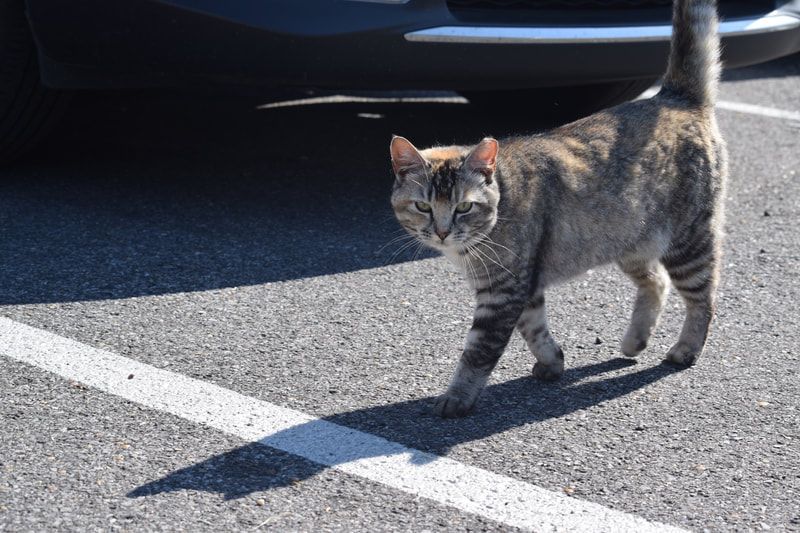
1) They are cats living outdoors that once had owners and have been lost or abandoned.
2) Over time they may become feral due to dwindling human contact.
3) Some may be friendly and will approach you for attention, while others it may take time to befriend. Either way, they are or can be socialized.
4) Once befriended, they may be socialized enough to be an indoor cat or even adopted, but that may take patience and time.
Feral Cat
1) They are cats living outdoors that have never been inside nor ever have had contact with humans.
2) They are fearful of people and survive on their own in the outdoors.
3) Feral cats will never be socialized, a lap cat, nor be an indoor cat.
4) Feral cats often live in a group called a colony. The colony lives in and defends a territory that has food and shelter available.
5) Kittens born to feral cats can be socialized at an early age and adopted.
6) Once trapped and neutered, return them back to their colony or outdoor territory.
What is an Ear Tip?
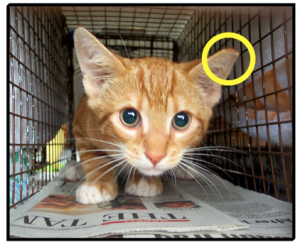
- It is painlessly removing a quarter inch off the top of a feral cat’s left ear while the cat is anesthetized for spay/neutering.
- Ear tipping the universal symbol of and the only way to permanently identify a feral cat who’s been evaluated, vaccinated, and sterilized.
- It ensures that a sterile cat will not undergo unnecessary repeat trapping and surgery.
More COMMUNITY Cat RESOURCES
For more information regarding trapping or care for community cats, explore the following websites.